
Aug 4, 2026
What a Recent Court Win Teaches Us
When Florida grandparents are raising a grandchild under a permanent guardianship, one question comes up more than almost any other: Can we adopt? And if so, how do we get started?
The answer is yes, and a recent court victory by attorneys at Tate Healey Webster illustrates exactly how that process works, why it matters, and what grandparents raising grandchildren in Florida need to know before they take the next step toward permanency.
The Difference Between Permanent Guardianship and Adoption in Florida
Permanent guardianship and adoption are not the same thing, and the distinction matters enormously for the child and for the family raising them.
A permanent guardianship, established under Chapter 39 of the Florida Statutes, gives grandparents legal custody of a grandchild when the dependency court determines that returning the child to a parent is contrary to the child's best interests. It is a meaningful protection, but it is not final. The biological parents retain their parental rights. The dependency court retains jurisdiction over the case. And the child does not become a legal member of the grandparent's family in the full sense that adoption provides.
Adoption under Chapter 63 is different. When a Florida court grants an adoption, the biological parents' rights are permanently terminated. The child becomes the legal child of the adoptive parents in every respect, with all the rights, inheritance protections, and permanency that come with it. Under Florida law, adoption is expressly the preferred permanency outcome after reunification is ruled out. Florida Statute section 39.621(7) states this directly: if a child will not be reunited with a parent, adoption is the primary permanency option.
Florida law also recognizes that relative adoptions, including grandparent adoptions, follow a streamlined process under Chapter 63. In many cases there is no home study requirement, and when parental consent is obtained the adoption can be finalized relatively quickly. When consent is not obtained, the court must determine whether a parent's rights should be terminated before adoption can proceed, which is where experienced legal representation becomes critical.
What Happened in This Case
Our firm recently represented a set of paternal grandparents who had been raising their grandson since birth. The child had been diagnosed with Autism Spectrum Disorder and chronic Post-Traumatic Stress Disorder and was receiving intensive therapeutic services. The dependency court had closed the case to a permanent guardianship with the grandparents. Rather than accepting the guardianship as a permanent endpoint, the grandparents filed a private adoption petition under Chapter 63 in Hillsborough County Family Court, seeking to terminate the biological mother's parental rights on the basis of abandonment and to finalize the adoption.
The biological mother moved to dismiss the petition, arguing that the Lee County dependency court's retention of jurisdiction meant that the Hillsborough County Family Court had no authority to hear the adoption case at all. She also argued that various factual disputes, including claims about visitation and a prior domestic violence injunction, required dismissal.
The court denied the motion to dismiss in its entirety. The adoption case will now proceed to an evidentiary hearing on the merits.
Why the Court Ruled the Way It Did
The legal framework here is important for any grandparent, or any attorney advising grandparents, to understand.
Florida has two entirely separate statutory pathways for terminating parental rights. One is under Chapter 39, which is what the Department of Children and Families uses in dependency proceedings. The other is under Chapter 63, which governs private adoptions. The Florida Second District Court of Appeal confirmed in In Interest of Z.A.R., 351 So. 3d 1208 (Fla. 2d DCA 2022), that these two pathways are separate and distinct, and that a dependency court's retention of jurisdiction over a permanent guardianship case does not prevent a family court from hearing a private Chapter 63 adoption petition.
The argument the biological mother made in our case, that the dependency court's jurisdiction blocked the family court from acting, is the exact argument the trial court accepted in Z.A.R. and the exact argument the appellate court reversed. The same Lee County dependency court, the same statutory framework, and the same result: the family court has jurisdiction to hear the adoption petition.
This matters because grandparents and other permanent guardians are often told, incorrectly, that they must go back to the dependency court to pursue adoption, or that they cannot pursue adoption at all while the dependency court retains jurisdiction. Z.A.R. and the outcome in our case make clear that is not the law in Florida.
What Abandonment Means Under Florida Adoption Law
One of the central allegations in our case was that the biological mother had abandoned the child within the meaning of Chapter 63. Florida law defines abandonment broadly, looking at the totality of the parent's conduct rather than a single act or a specific time window.
Under Florida Statute section 63.032(1), abandonment means a situation where a parent, while being able to do so, makes little or no provision for the child's support and makes little or no effort to communicate with the child. Florida courts evaluate abandonment based on all the circumstances, including whether the parent maintained regular visitation, provided financial support, sent gifts or cards, participated in the child's medical or educational life, and demonstrated a genuine commitment to the responsibilities of parenthood.
There is no minimum waiting period under Florida law before a petition alleging abandonment can be filed. The relevant period is not limited to the months following a permanent guardianship. It encompasses the child's entire history with that parent. The Fourth District Court of Appeal confirmed in V.C.B. v. Shakir, 145 So. 3d 967 (Fla. 4th DCA 2014), that courts consider the totality of the circumstances, not just the factors listed in the statute.
A Note on Adoption Subsidies: Financial Help May Be Available
One question grandparents raising grandchildren frequently ask is whether financial assistance is available after an adoption is finalized, especially when the child has special needs. The answer, in many cases, is yes, even in a private adoption.
A child may qualify for an adoption subsidy under Florida Statute section 409.166 if the child has been found to have special needs as defined by state law. This can include children with documented physical, emotional, or developmental conditions, children who are older, and children who have been in foster or out-of-home care. A qualifying child may be eligible for a monthly maintenance subsidy, ongoing Medicaid coverage, and reimbursement of certain nonrecurring adoption expenses.
The attorneys at Tate Healey Webster assist grandparents and other relative adoptive parents in identifying subsidy eligibility, navigating the application process with DCF, and ensuring that subsidy agreements are in place before finalization. In most cases, subsidy eligibility must be established prior to the adoption being finalized. Waiting until after finalization can result in the permanent loss of benefits the child would otherwise have been entitled to receive.
If you are a grandparent pursuing adoption of a grandchild who has special needs, a history in the child welfare system, or documented medical or behavioral conditions, we encourage you to ask about subsidy eligibility early in the process. Our team can help you understand what your grandchild may qualify for and guide you through the steps to secure those benefits before closing.
What This Means for Grandparents in Florida
If you are a grandparent raising a grandchild under a permanent guardianship in Florida, here is what this case confirms:
You do not have to wait for the dependency court to terminate its jurisdiction before pursuing adoption. A private adoption petition under Chapter 63 can be filed in family court, and the family court has the authority to hear it, even if the dependency court has retained jurisdiction over the guardianship case.
You do not have to return to the dependency court to pursue termination of parental rights. Chapter 63 provides its own independent pathway, with its own standards and its own court.
Guardianship is not the finish line. Florida law is explicit that adoption is the preferred permanency outcome for children who cannot be reunified with their parents. A child in a permanent guardianship is still entitled to the full legal security that adoption provides, and pursuing adoption is often not only possible but exactly what the law encourages.
Financial assistance may be available to help. If your grandchild has special needs or a history in the child welfare system, an adoption subsidy may be available even through a private adoption. An experienced adoption attorney can help you evaluate eligibility and protect access to those benefits before finalization.
Next Steps
If you are a grandparent raising a grandchild in Florida and wondering whether adoption is possible, the answer in most cases is yes, and sooner than you may think.
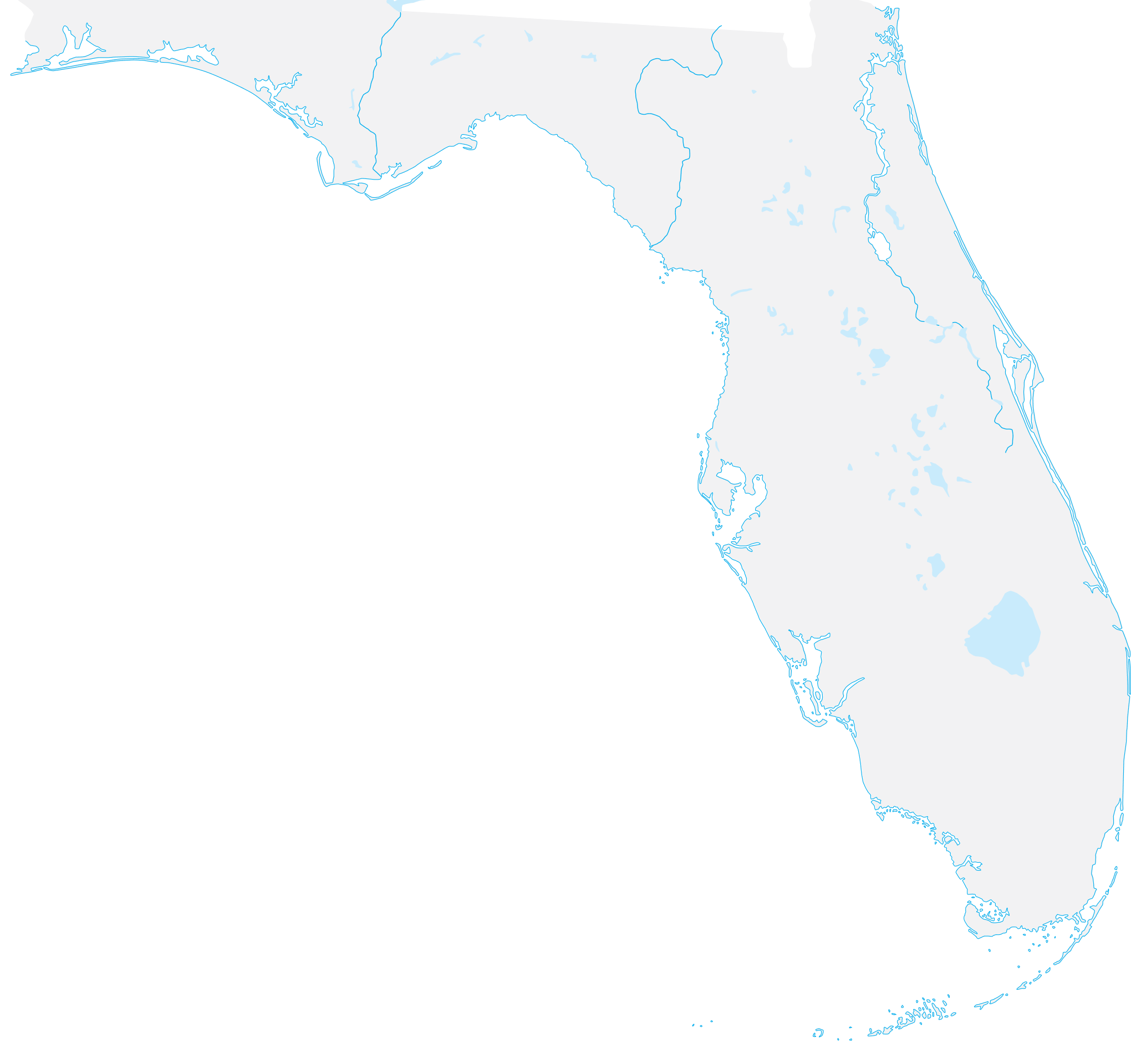
The attorneys at Tate Healey Webster have represented grandparents in exactly this situation across Florida, in Tampa, Orlando, Naples, Jacksonville, Fort Lauderdale, Fort Myers, Boca Raton, and throughout the state. Since 1999, our firm has helped bring more than 5,000 families together. We have helped shape Florida adoption law, and we know how to navigate the intersection of dependency and private adoption proceedings that makes these cases uniquely complex.
If you are ready to explore whether adoption is the right next step for your family, we invite you to reach out. You can call us at (888) 629-1664 or book a consultation at floridaadoptionattorney.com.
Your grandchild deserves permanency. Let us help you get there.
Frequently Asked Questions
Can grandparents adopt a grandchild who is in a permanent guardianship in Florida?
Yes. Under Florida law, permanent guardians, including grandparents, may file a private adoption petition under Chapter 63 in family court even while a dependency court retains jurisdiction over the guardianship case. A recent court victory by Tate Healey Webster in Hillsborough County confirmed this directly.
Do grandparents have to go back to the dependency court to adopt?
No. Chapter 63 provides an independent pathway for private adoption that does not require returning to the dependency court that established the guardianship.
How long does a parent have to be absent before abandonment can be alleged in a Florida adoption?
Florida law sets no minimum waiting period. Abandonment is evaluated based on the totality of the parent's conduct throughout the child's entire life, not just a specific period following the guardianship.
What is the difference between permanent guardianship and adoption in Florida?
Permanent guardianship gives grandparents legal custody but does not terminate parental rights or make the child a legal member of the adoptive family. Adoption permanently terminates parental rights and creates a full legal parent-child relationship. Florida law identifies adoption as the preferred permanency outcome when reunification is not possible.
Is financial assistance available for grandparents who adopt?
It may be. Children with special needs who have a history in the child welfare system may qualify for an adoption subsidy, including monthly maintenance payments and Medicaid, even through a private adoption. Eligibility generally must be established before the adoption is finalized, so it is important to raise this with your attorney early in the process.